

Pulp, Paper, & Packaging
Equipment Repair &
Modernization

In a Continuous-Process Mill, There Is No Good Time for Equipment to Go Down.

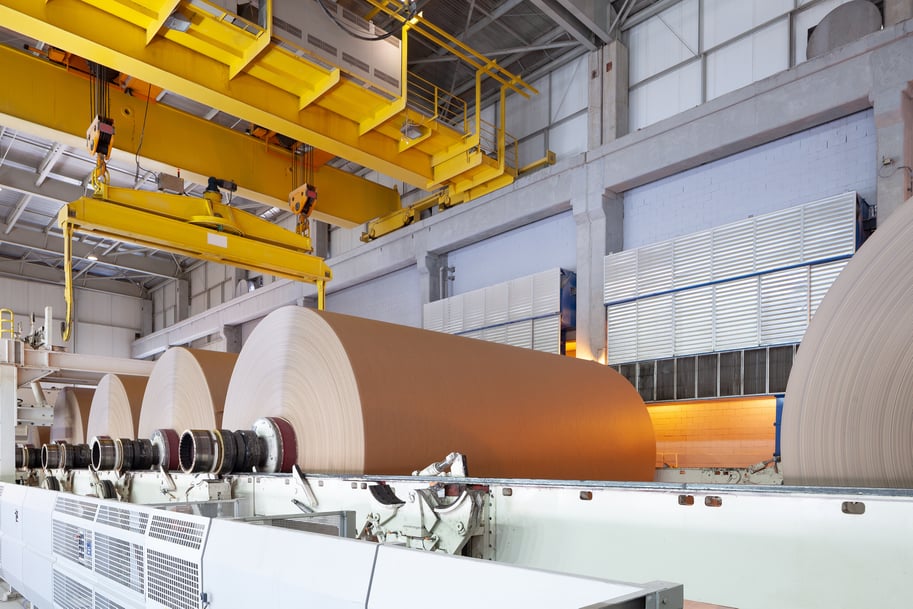
A paper machine runs day and night. A corrugator doesn't stop between orders. A winder that goes down mid-reel doesn't wait for a convenient time to be repaired. In pulp, paper, and packaging, the equipment has to keep running — and when something starts to wear, slip, or drift, the whole line responds.

Enprotech repairs, rebuilds, and modernizes the heavy equipment that keeps pulp mills, paper machines, corrugator lines, and converting operations running. With 85+ years of experience in continuous-process industrial environments, we know what this equipment faces and what it takes to bring it back without a long outage.

Tell us what you're running and what's giving you trouble. We'll help you figure out what needs to happen.

iStock-1331287205 (1) 3

What We Do for Pulp, Paper & Packaging Operations

  • Press section, wire section, and felt roll rebuild and repair.
  • Winder drum, reel spool, and unwind stand service.
  • Corrugator roll, singlefacer, and double-backer drive repair and rebuild.
  • Gearbox, drive, and motor rebuild for continuous-duty applications.
  • PLC, HMI, and drive controls modernization.
  • 24/7 emergency response when critical equipment goes down.

What Wears Down Equipment in Pulp, Paper & Packaging Environments

Most problems in a continuous-process mill don't start with a sudden failure. They start with
conditions that the equipment runs through every hour — moisture, heat, chemical exposure,
and constant mechanical load — wearing on components that have to keep performing without a break.

Moisture, Steam & Chemical Exposure

Moisture, Steam & Chemical Exposure

Press section rolls, felt rolls, suction boxes, and drive components operate in environments that most industrial equipment never sees. Constant steam exposure, white water contamination, and chemical carry-over accelerate bearing wear, seal degradation, and corrosion in ways that are hard to track until tension balance is lost or web breaks start climbing.

High-Speed Continuous Duty

High-Speed Continuous Duty

A paper machine doesn't get a rest between shifts. Neither do winder drums, corrugator rolls, or converting line drives. Continuous operation under load means wear accumulates faster than scheduled inspection intervals can catch it — and when something finally slips, the whole line absorbs the impact.

Controls That Can't Keep Pace

Controls That Can't Keep Pace

Older drive systems and PLCs struggle to hold consistent tension, speed, and nip pressure across a high-speed line. Small variances in feed rate or line tension show up as web breaks, sheet defects, packaging rejects, or wasted material before anyone traces it back to the controls. When the controls fall behind the line, the line pays for it.

How Enprotech Supports Pulp, Paper
& Packaging Operations

Press Section & Roll Rebuilds

Press Section & Roll Rebuilds

We rebuild press section rolls, suction rolls, felt rolls, and wire section components to restore nip geometry, surface profile, and balance. Every rebuild is machined and inspected to the tolerances your line speed and sheet quality require. A roll that comes back out of spec goes back in the machine and causes the same problems it left with.

Spiral

Winder, Reel & Corrugator Equipment

Winder drums, reel spools, corrugator rolls, singlefacer components, and double-backer drives all develop specific wear patterns under continuous duty. We rebuild this equipment with the duty cycle in mind — the speed, the tension, the thermal load, and the frequency of product changeovers — not for a static bench test.

Drive & Controls Modernization

Drive & Controls Modernization

Drive systems and PLCs that can't hold consistent line speed, tension, or nip pressure are a source of waste and downtime that's often misdiagnosed as a mechanical problem. We update drives and controls alongside mechanical work so the electrical and mechanical systems come back aligned. Where it makes sense, we add monitoring so your team can see line performance trends before they become failures.

24/7 Emergency Response

24/7 Emergency Response

When a press section goes down, a winder seizes, or a corrugator drive fails mid-run, we mobilize fast. Our field teams arrive with the mechanical and electrical capability to assess the problem and start repairs. A continuous-process line that's stopped is losing output by the hour — we know that, and we move accordingly.

Press Section & Roll Rebuilds

Press Section & Roll Rebuilds

We rebuild press section rolls, suction rolls, felt rolls, and wire section components to restore nip geometry, surface profile, and balance. Every rebuild is machined and inspected to the tolerances your line speed and sheet quality require. A roll that comes back out of spec goes back in the machine and causes the same problems it left with.

Spiral

Winder, Reel & Corrugator Equipment

Winder drums, reel spools, corrugator rolls, singlefacer components, and double-backer drives all develop specific wear patterns under continuous duty. We rebuild this equipment with the duty cycle in mind — the speed, the tension, the thermal load, and the frequency of product changeovers — not for a static bench test.

Drive & Controls Modernization

Drive & Controls Modernization

Drive systems and PLCs that can't hold consistent line speed, tension, or nip pressure are a source of waste and downtime that's often misdiagnosed as a mechanical problem. We update drives and controls alongside mechanical work so the electrical and mechanical systems come back aligned. Where it makes sense, we add monitoring so your team can see line performance trends before they become failures.

24/7 Emergency Response

24/7 Emergency Response

When a press section goes down, a winder seizes, or a corrugator drive fails mid-run, we mobilize fast. Our field teams arrive with the mechanical and electrical capability to assess the problem and start repairs. A continuous-process line that's stopped is losing output by the hour — we know that, and we move accordingly.

Press Section & Roll Rebuilds

Press Section & Roll Rebuilds

We rebuild press section rolls, suction rolls, felt rolls, and wire section components to restore nip geometry, surface profile, and balance. Every rebuild is machined and inspected to the tolerances your line speed and sheet quality require. A roll that comes back out of spec goes back in the machine and causes the same problems it left with.

Spiral

Winder, Reel & Corrugator Equipment

Winder drums, reel spools, corrugator rolls, singlefacer components, and double-backer drives all develop specific wear patterns under continuous duty. We rebuild this equipment with the duty cycle in mind — the speed, the tension, the thermal load, and the frequency of product changeovers — not for a static bench test.

Drive & Controls Modernization

Drive & Controls Modernization

Drive systems and PLCs that can't hold consistent line speed, tension, or nip pressure are a source of waste and downtime that's often misdiagnosed as a mechanical problem. We update drives and controls alongside mechanical work so the electrical and mechanical systems come back aligned. Where it makes sense, we add monitoring so your team can see line performance trends before they become failures.

24/7 Emergency Response

24/7 Emergency Response

When a press section goes down, a winder seizes, or a corrugator drive fails mid-run, we mobilize fast. Our field teams arrive with the mechanical and electrical capability to assess the problem and start repairs. A continuous-process line that's stopped is losing output by the hour — we know that, and we move accordingly.

When Something Goes Down, We Move Fast

A web break that brings down a press section, a winder that seizes mid-reel, a corrugator that trips and backs up the whole converting line — these don't wait for business hours.

We deploy field teams quickly to assess the failure and start repairs. The goal is to get the line running again — and to find out what caused it so the same thing doesn't happen at the worst possible moment in the next run.

Dealing with an equipment failure right now? Call us. We're available 24/7.

iStock-1331287205 (1) 10

What Mill and Maintenance Teams Are Usually Dealing With

These are the things we hear most often from pulp, paper, and packaging maintenance teams:

  • Web breaks that keep climbing and can't be traced to a clear source.
  • A press section or winder that was patched instead of properly rebuilt.
  • Drive or tension control issues that show up as sheet defects or packaging rejects.
  • Roll or drum wear that's been managed around instead of corrected.
  • An outage window that's too short to do the work that actually needs doing.
  • Parts for legacy equipment that are getting harder to source.

If any of those sound familiar, that's where we start.

Why Mill and Maintenance Teams
Trust Enprotech

We Find What's Actually Driving the Problem

Recurring web breaks, sheet defects, or tension inconsistencies almost always have a mechanical or controls source. We track it down — roll profile, nip geometry, bearing condition, drive performance, tension zone calibration — and fix that, not just the symptom that triggered the call.

We Fix What's Actually Causing the Problem

Rebuilt for Continuous Duty, Not a Bench Test

We rebuild rolls, winders, corrugator components, and drive assemblies for how they actually run — the speed, the load, the moisture exposure, the duty cycle. A component that holds up in the shop has to hold up at full line speed, under steam and tension, for weeks between outages. That's what we build for.

Rebuilt for Continuous Duty, Not a Bench Test

Work Planned Around Your Outage Window

Outage windows in a paper mill or corrugator plant are planned well in advance and protected carefully. We work around those windows. If a scope needs to be staged across multiple outages, we can plan that. We're not going to pull a critical roll or a drive when the machine is in the middle of a run.
services

You Know What's Coming After

When the work is done, you get documentation — what we found, what we fixed, what the equipment was returned to, and what else needs attention on a timeline. That gives your maintenance team a clear picture going into the next scheduled outage, not a question mark.
Ram Parallelism Across the Die Area

What to Expect From Enprotech

Lifecycle and Outage Planning

Lifecycle and Outage Planning

We build, rebuild, and inspect programs around your outage calendar. That means tracking equipment condition between outages, planning scope in advance, and making sure the work that needs to happen gets into the right window — before it becomes the reason an outage runs long.

CalendarCheck

Work Planned Around Your Schedule

Pulp, paper, and packaging operations have tight outage windows and production commitments that don't move easily. We plan repair and rebuild scopes around those constraints. The work gets done in the time your operation has — not in the time it would take if you had no pressure.

Parts for Legacy Equipment

Parts for Legacy Equipment

A lot of paper machines and corrugator lines are running equipment that the original manufacturer no longer supports. When parts are discontinued or unavailable, we reverse-engineer and manufacture replacements to original specifications. You don't have to shut down because a part can't be sourced.

Fewer Unplanned Stops Over Time

Fewer Unplanned Stops Over Time

Maintenance teams that work with us on a planned basis see fewer unplanned outages over time. Inspection programs, scheduled rebuilds, and parts planning keep continuous-process equipment in better condition between outages — so your team is dealing with planned work, not emergency calls at 3 am.

Lifecycle and Outage Planning

Lifecycle and Outage Planning

We build, rebuild, and inspect programs around your outage calendar. That means tracking equipment condition between outages, planning scope in advance, and making sure the work that needs to happen gets into the right window — before it becomes the reason an outage runs long.

CalendarCheck

Work Planned Around Your Schedule

Pulp, paper, and packaging operations have tight outage windows and production commitments that don't move easily. We plan repair and rebuild scopes around those constraints. The work gets done in the time your operation has — not in the time it would take if you had no pressure.

Parts for Legacy Equipment

Parts for Legacy Equipment

A lot of paper machines and corrugator lines are running equipment that the original manufacturer no longer supports. When parts are discontinued or unavailable, we reverse-engineer and manufacture replacements to original specifications. You don't have to shut down because a part can't be sourced.

Fewer Unplanned Stops Over Time

Fewer Unplanned Stops Over Time

Maintenance teams that work with us on a planned basis see fewer unplanned outages over time. Inspection programs, scheduled rebuilds, and parts planning keep continuous-process equipment in better condition between outages — so your team is dealing with planned work, not emergency calls at 3 am.

Lifecycle and Outage Planning

Lifecycle and Outage Planning

We build, rebuild, and inspect programs around your outage calendar. That means tracking equipment condition between outages, planning scope in advance, and making sure the work that needs to happen gets into the right window — before it becomes the reason an outage runs long.

CalendarCheck

Work Planned Around Your Schedule

Pulp, paper, and packaging operations have tight outage windows and production commitments that don't move easily. We plan repair and rebuild scopes around those constraints. The work gets done in the time your operation has — not in the time it would take if you had no pressure.

Parts for Legacy Equipment

Parts for Legacy Equipment

A lot of paper machines and corrugator lines are running equipment that the original manufacturer no longer supports. When parts are discontinued or unavailable, we reverse-engineer and manufacture replacements to original specifications. You don't have to shut down because a part can't be sourced.

Fewer Unplanned Stops Over Time

Fewer Unplanned Stops Over Time

Maintenance teams that work with us on a planned basis see fewer unplanned outages over time. Inspection programs, scheduled rebuilds, and parts planning keep continuous-process equipment in better condition between outages — so your team is dealing with planned work, not emergency calls at 3 am.

Frequently asked questions

Can you support older paper machine or packaging equipment?

Yes. A lot of our work involves legacy equipment — paper machines, corrugators, and converting lines that have been in service for decades. We rebuild mechanical systems, modernize controls, and manufacture parts when originals are no longer available. If the machine is still structurally sound, we can usually extend its service life significantly.

How fast can you respond to an emergency?

Our teams are available 24/7 and positioned across North America. Response time depends on location and what the job requires. When you call, we'll tell you what we can commit to — not what sounds good. A continuous-process line that's stopped is losing output every hour, and we treat it that way.

What's the difference between a repair and a rebuild?

A repair addresses the immediate failure — it gets the line running again. A rebuild restores the component to proper operating condition, corrects what caused the failure, and gives it a realistic service life going forward. A repaired roll that goes back in the machine with the same wear profile will cause the same problems. We recommend the right scope for where the equipment actually is.

Can you work within our outage window?

Yes. We plan rebuild and repair scopes around your outage schedule. We'll tell you what's realistic for the window you have and what can be staged into a future outage if the scope is larger than the time available.

Can you help if we keep seeing the same failure come back?

Yes — that's one of the most common reasons mills call us. A recurring failure usually has a root cause that a previous repair didn't address. We inspect the equipment, the surrounding systems, and the operating conditions to find what's actually driving the pattern — then fix that.

Do you provide documentation after the work is done?

Yes. Every job comes with documentation — condition before, work performed, and parameters the equipment was returned to. That goes into your maintenance records and gives your team a baseline for the next outage and service interval planning.

Every Web Break and Recurring Repair Has a Source. Let's Find It.

You can keep managing the symptoms — patching what breaks, working around what's worn — or you can find what's actually causing the problem and fix that. In a continuous-process environment, the difference between those two approaches shows up in your outage frequency, your output quality, and how much your maintenance team is spending on emergency calls.

Tell us what's giving you trouble and when your next outage window opens. We'll help you put together a plan that actually addresses it.

Tell us what's giving you trouble. We'll fix it.